Retail locker and key tracking systems explained: Improve security & accountability

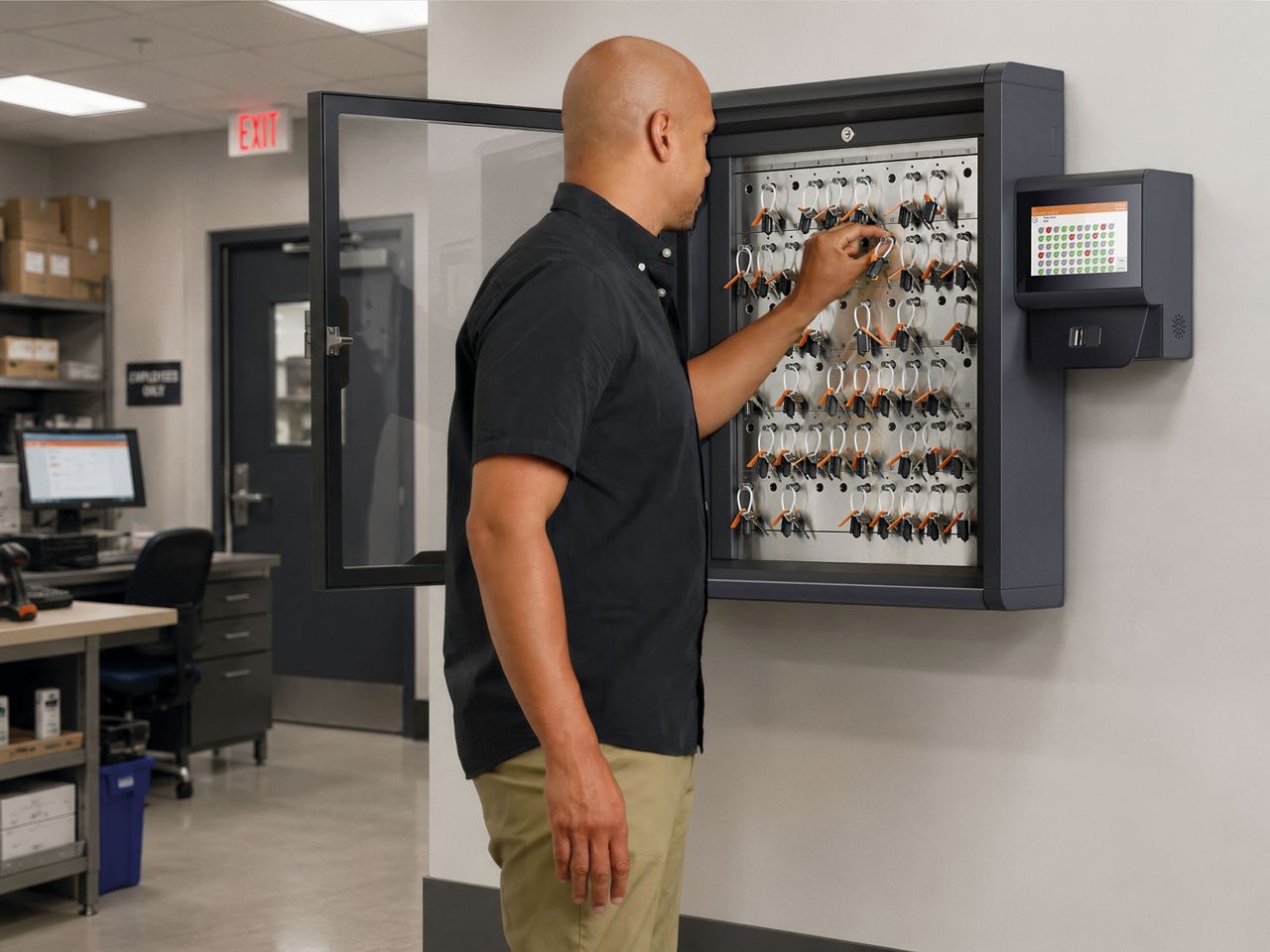
Discover how retail locker and electronic key tracking systems improve security, accountability and operational control in retail environments.
Managing retail operations depends on controlling access to both physical spaces and shared equipment. Store keys, scanners, tablets and radios all play an important role in day-to-day operations, yet many retailers still struggle to understand who has accessed them and where they are at any given time.
Electronic key tracking systems and intelligent lockers were created to remove that uncertainty. By creating a clear record of access and usage, they help retailers maintain accountability and greater operational control.
How key tracking systems work
- User authentication – User authentication. Before a key can be removed, employees identify themselves using a PIN, access card or biometric credential. This isn't just about logging who took a key afterward, it's about restricting which keys an employee can access in the first place, so unauthorized removal isn't possible to begin with.
- Automated logging – Every key transaction is recorded automatically, through the same kind of connected system that tracks scanners and other shared devices, rather than keys being managed through a separate manual process.
- Real-time key status – Instead of searching cabinets or calling around the store, with an electronic key management system managers can see in seconds whether a key is present or checked out, and who has it right now.
- Alerts and notifications – Systems can be configured with a curfew, so if a key isn't returned within a set window, a manager is notified automatically rather than discovering the gap during the next shift change.
How intelligent lockers work
- User authentication – Before equipment can be removed, employees authenticate using an approved credential such as a PIN, access card or biometric identifier. This ensures only authorized users can access shared assets.
- Automated logging – Every checkout and return is recorded automatically. Managers can see who accessed equipment, when it was removed and when it was returned.
- Real-time asset status – Managers can quickly see whether equipment is available, checked out or overdue for return, helping reduce the time spent searching for shared assets.
- Alerts and notifications – Many intelligent locker systems can notify managers when equipment has not been returned within a specified timeframe or when unusual activity occurs.
- Charging status – Intelligent lockers help ensure shared equipment is returned to charge between uses, making it more likely that devices are ready for the next employee. This can be particularly valuable during shift handovers, where assets often change hands.
What to look for in a key tracking system
Audit trails
A good key tracking system should create a detailed record of every key transaction. This makes it easy to see who accessed a key, when it was removed, and when it was returned. In the event of a missing key or security incident, this information can help businesses establish accountability during an investigation.
Integration with device locker systems
Retailers often manage both keys and shared equipment. Systems that use the same authentication methods, reporting tools and permissions structure across key cabinets and intelligent lockers create a more consistent approach to accountability. Whether an employee accesses a key or a scanner, the process remains the same.
Permissions management
Access requirements vary across a retail business. Permissions management allows businesses to control which users can access specific keys, helping to reduce risk and ensure access rights align with job responsibilities.
Multi-site reporting
For retailers operating across multiple locations, centralized reporting can make key management so much easier. Managers can monitor activity across stores from a single platform rather than relying on separate processes at each site.
Security platform integrations
Key tracking systems and intelligent lockers are often most effective when they operate as part of the same wider ecosystem. Integrating them with existing security platforms can help businesses maintain consistent permissions, user records and accountability across multiple access points.
Automated reporting
Generating reports manually can be time-consuming. Automated reporting gives managers quick access to the information they need, making it easier to review key activity and investigate potential issues.
Why retailers use key tracking systems
- Reduced key loss – Few things are more frustrating than starting a shift and discovering the key you need isn't where it's supposed to be. Key tracking systems make it much easier to find out who has a key, helping teams spend less time searching and more time getting on with their day.
- Improved accountability – Nobody likes playing detective when a key can't be found. By automatically recording key activity, electronic tracking systems make it clear who removed a key and when. This helps create a greater sense of responsibility without adding extra work for employees.
- Faster issue resolution – When questions (or accusations) arise, managers can quickly check the system for answers. Instead of making calls or searching through paperwork, they can immediately see the status of a key and take action if needed.
- Reduced shrinkage – Keys often provide access to valuable stock and restricted areas. Maintaining tighter control over who can access them can help reduce opportunities for theft and support wider efforts to minimize shrinkage across the business.
Manual systems vs intelligent systems
Many retailers weigh key tracking systems against the cost of what they're replacing, a cabinet against a sign-out sheet, rather than against what they're actually risking by staying manual. The real comparison isn't price against price, it's the cost of the system against everything a manual process quietly enables: lost time, slower investigations, and the kind of unclear accountability that shrinkage depends on to go unnoticed. Here's where that gap actually shows up, and what changes once key tracking becomes intelligent.
Accountability
Traditional: It's not always easy to determine who last accessed a key or who's responsible for returning it, especially when several employees share the same set throughout the day.
Intelligent: Every key transaction is tied to a specific person automatically, so when something doesn't add up, there's already an answer instead of a list of everyone who might be responsible.
Security
Traditional: It can be difficult to control who accesses keys or to catch unauthorized activity before it turns into an actual loss.
Intelligent: Access is restricted to approved users only, closing off the kind of unmonitored access that shrinkage relies on to go unnoticed.
Finding missing keys
Traditional: Locating a missing key often means searching high and low for hours, pulling staff away from the work they're actually supposed to be doing.
Intelligent: Managers can see a key's status and who last accessed it in seconds, no search required.
Reporting
Traditional: Investigating a discrepancy after the fact means piecing together memory, sign-out sheets, and guesswork.
Intelligent: A complete report of key activity is available on demand, so investigations start with answers instead of starting from scratch.
Multi-site management
Traditional: Without a shared system, each location risks developing its own version of "good enough," and there's no easy way to verify consistency from outside that store.
Intelligent: One platform shows key activity across every location, so oversight doesn't depend on visiting each store individually.
Key tracking systems in the real world
Retail chains
Retailers with multiple locations often find it difficult to maintain the same standards of accountability everywhere. Key tracking systems help control access across the business, while intelligent lockers help ensure shared equipment is returned, charged and ready for the next shift.
Automotive retail. Vehicle keys are among the most important assets in a dealership. A key tracking system helps ensure they remain secure while allowing staff to access them when needed.
Pharmacies
Pharmacies operate in an environment where access to certain areas must be carefully controlled. Electronic key tracking helps create a clear record of key usage while ensuring only authorized employees can access specific keys.
Warehousing
A missing key can quickly slow down activity in a warehouse. Key tracking systems help businesses keep track of important keys and reduce the disruption caused when one cannot be located.
Even modest improvements in accountability translate into real savings. With shrink running at 1.6% of sales industry-wide, and 63% of that traced to internal causes, the opportunity sits squarely in the kind of access gaps key tracking is built to close. To see what that could mean for your own store count, Traka's ROI calculator estimates potential savings based on current loss patterns and number of locations.
What's the difference between a basic electronic key cabinet and an intelligent key tracking system?
A basic cabinet restricts who can remove a key but usually stops there, with no usable record beyond a local log. An intelligent system turns every transaction into a searchable, reportable record and can alert a manager automatically if a key isn't returned on time.
How quickly can a missing key be identified? With an intelligent system, in seconds. A manager can check a key's status and see who last accessed it without searching a cabinet or calling around the store.
Can key tracking help during a compliance audit or investigation? Yes. Because every transaction is logged automatically, retailers can pull a complete history of who accessed a key and when, rather than reconstructing it from memory or paperwork after the fact.
Improve retail security with smarter key tracking
- Retail
- Traka Americas
Retail key and asset management solutions
From store keys and access cards to handheld scanners, mobile devices, and other shared equipment, Traka helps retailers improve accountability, strengthen security, and keep daily operations running smoothly across every location.