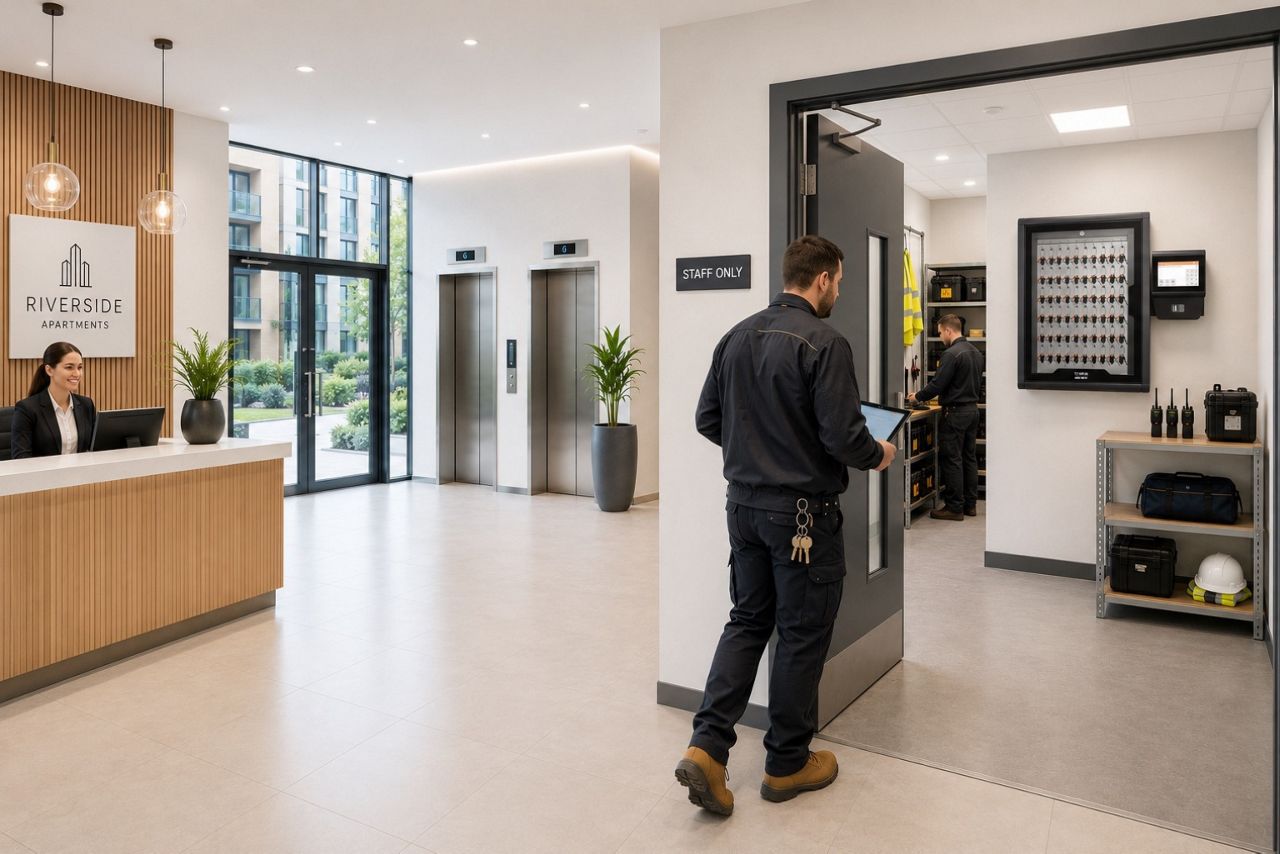
The world of property management looks very different to what it did 10 years ago. Where security once meant little more than locking doors at the end of the day, modern buildings now depend on far more connected systems operating behind the scenes.
Access control platforms, CCTV networks, visitor management tools, electronic key cabinets, smart lockers, and centralized reporting software all now play a role in keeping buildings secure while helping daily operations stay on solid foundations.
For property managers, the challenge is no longer simply adding more security. It is making sure those systems remain practical across busy buildings filled with contractors, tenants, maintenance teams, delivery drivers, and temporary staff all needing different levels of access throughout the day.
That shift is pushing many property teams away from disconnected manual processes and toward systems that provide much clearer visibility over who can access certain areas and when.
5 ways to develop property security systems
- Stop relying on reception desks to manage keys
In many properties, reception teams still spend large parts of the day handing keys to contractors or chasing down overdue returns. By introducing electronic key cabinets, property managers can take much of that pressure away from front desk staff. Approved users can securely access keys without relying on manual handovers, while property teams maintain clear visibility over who accessed what and when.
- Give contractors controlled access without losing visibility
Contractor access can quickly become difficult to manage across busy properties, especially when multiple vendors need temporary access to plant rooms, service areas, or vacant units. Intelligent key management systems allow property managers to control exactly who can access specific keys while automatically recording collection and return activity throughout the day.
- Reduce the security risks around vacant properties
Items such as radios, body-worn cameras, incapacitant spray, and weapons require far tighter oversight than they once did. Intelligent locker systems help prisons control who can access equipment while automatically recording usage activity. That creates clearer accountability without adding extra administrative pressure onto already busy prison staff.
- Bring scattered building systems into one place
Vacant properties can quickly become security blind spots, especially when multiple contractors or maintenance teams require temporary access throughout the week. Storing access keys inside secure electronic cabinets helps property teams maintain tighter control over who enters empty spaces while creating a much clearer record of access activity.
- Improve how shared assets are managed on-site
Property teams often manage far more than physical keys. Radios, tablets, maintenance equipment, parking permits, and access fobs can all become difficult to track once multiple teams start using them daily.
Intelligent locker systems help property managers securely store shared assets while maintaining a clear record of who accessed them and when
Critical systems you cannot ignore
A contractor arrives to carry out maintenance work in a vacant apartment, but the master key they need was signed out earlier that morning and nobody is completely sure where it ended up. Reception starts trying to track it down, and a relatively simple maintenance job suddenly becomes far more disruptive than it needed to be.
Situations like that are exactly why access management has become such a major focus across modern properties.
Keys still control entry into some of the most sensitive parts of a site, from plant rooms and utility spaces to vacant apartments and restricted offices. The more people who need temporary access throughout the day, the harder manual processes become to manage properly.
Electronic key cabinets help property managers introduce far more structure around access without making buildings feel restrictive or difficult to operate. Instead of relying on paper logs or verbal handovers, teams can securely control who accesses keys while maintaining a clear history of activity automatically.
The same applies to shared assets. Devices, radios, tablets, inspection tools, and parking permits can easily disappear into day-to-day operations once multiple teams start using them. Intelligent lockers help keep those items secure while giving property teams a much clearer picture of where assets are and who currently has them.
When problems do happen, visibility becomes everything. Whether responding to tenant concerns or reviewing contractor activity, having immediate access to reliable audit information can save property teams huge amounts of time.
Our team are here to help
Traka is not just about installing another system into a building and walking away. Property management changes constantly. Contractors change. Tenants change. Buildings expand. Operational pressures shift from one month to the next. What works perfectly today can quickly become difficult to manage six months later.
That is why our approach is built around long-term relationships rather than one-off installations.
Some customers come to us because reception teams are overwhelmed managing keys. Others are struggling with contractor access, vacant units, or shared equipment constantly moving between departments. Sometimes it is simply the feeling that too many important processes still rely on old spreadsheets and handwritten logs.
Whatever the challenge looks like, our role is to help property teams make those day-to-day pressures easier to manage without disrupting how buildings already operate.
As property operations become smarter and expectations continue evolving, Traka continues evolving alongside the customers using our systems.