Smart lockers by industry – 5 case studies & why they're important

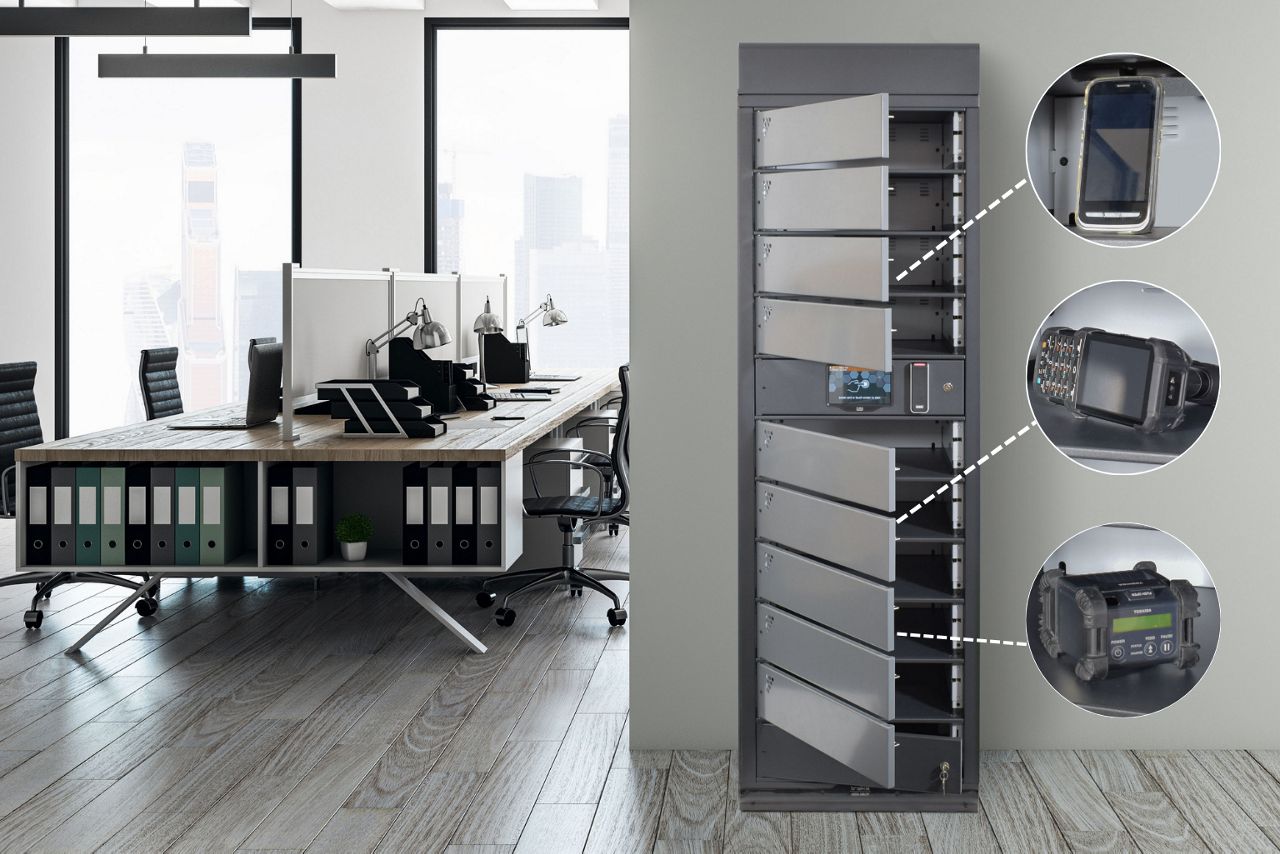
Not all lockers are created equal. In one setting, they safeguard life-saving medicines; in another, they keep mission-critical devices powered and ready for use. From hospitals to offices and frontline security teams, smart lockers serve very different purposes depending on the environment they operate in.
Understanding how smart lockers are used within your specific sector is key to choosing the right solution. Healthcare environments may require secure, temperature-controlled storage for medication, while workplaces often focus on managing laptops or handheld devices.
Police and security teams, meanwhile, need controlled access to sensitive equipment where accountability and availability are critical.
When configured to meet these unique operational demands, smart lockers do far more than provide storage. They help control access, support compliance requirements, track asset usage, manage charging and maintenance, and integrate seamlessly with existing systems
5 reasons why smart lockers are critical to business security
- Control access without standing over people
Imagine a busy hospital ward where nurses constantly need access to medications or devices. A smart locker lets only authorised staff open the right compartments. No more keys floating around or managers checking who took what. Access is recorded automatically, so if something goes missing, it’s easy to see who last used it. Staff get what they need quickly, and managers get peace of mind.
- Keep track of valuable or sensitive equipment
In a police station or security operation, firearms, body cams, or specialised tools need careful handling. Smart lockers can log every removal and return. That means if a device goes missing, there’s an instant record of who had it last.
- Protect portable tech in offices
Laptops, tablets, and handheld scanners can quickly go missing when left unattended. Smart lockers in offices or shared workspaces keep devices secure while still allowing staff easy access when needed. Charging and storage are managed in a single location, reducing the need for IT teams to track down equipment or carry out manual checks.
- Manage high-use or shared resources
Think of a utility company sending engineers to remote sites. Smart lockers can hold tools or equipment that are used across teams and shifts. There’s no need for physical sign-outs or tracking sheets. Everything is controlled digitally, and managers can see in real time who has what.
- Support compliance and audit requirements
Some industries require strict logs for everything from medication handling to firearms or safety equipment. Smart lockers automatically record every access attempt and transaction. That means if auditors arrive, all the information is already there, neat and auditable.
How are smart locker systems evolving in 2026 by industry?
Smart lockers are no longer just storage. In 2026, they’re becoming part of how many industries operate day to day, with each sector using them in different ways.
Healthcare teams rely on lockers to control access to medication and shared devices without interrupting busy shifts. In utilities and field services, lockers are installed at depots so engineers can collect fully charged equipment before heading straight to site. Police forces use them to manage issued kit, removing the need for manual handovers and improving accountability.
Corporate workplaces are evolving as well. With hybrid working now the norm, lockers help manage shared laptops and loan equipment without placing extra demands on IT teams. Logistics operations are also adopting locker systems to support temporary storage and equipment returns across changing schedules.
This isn’t just a change in storage; it’s a shift in how work flows. Smart lockers are moving from convenience to necessity across modern workplaces.
Which industries require smart locker systems the most?
There’s really no hard-and-fast rule. Any industry that manages shared equipment tends to feel the need first though. Healthcare, law enforcement, transportation, logistics, utilities, and large facilities teams all rely on items moving between people throughout the day.
Without an efficient system in place, small problems stack up quickly. Equipment goes missing. Staff waste time trying to locate devices. Responsibility becomes unclear when something breaks or isn’t returned. While none of this sound might sound too dramatic, it quietly affects productivity and security.
Smart lockers solve a practical, everyday problem: ensuring the right person can access the right equipment at the right time. Organizations built around mobility or shift-based work often see the greatest benefit, because access doesn’t stop simply because a supervisor isn’t available.
Our team can help you to get started
Every business uses equipment differently, which means there’s no single smart locker setup that works for everyone. That’s where the Traka team can help.
Our team works with organizations across healthcare, public safety, logistics, corporate environments, and critical infrastructure to understand how assets move through the business. We look at how items are issued, where delays happen, and what level of control makes sense for your teams.
From selecting the right locker type to integrating systems with existing access control or HR platforms, Traka helps businesses introduce smart lockers in a way that feels natural from day one. We don’t just install a system and walk away either.
The goal is to make sure your smart lockers work for you today and continue to work for the long term. That’s why Traka is here for the long haul.